
In the UAE, energy firms run more than 100 oil and gas plants. They pump out over 3 million barrels of oil per day and invest over AED 10 billion in safety upgrades each year. Engineers use PT100 Sensors in UAE to watch heat inside pipes, tanks, and reactors where gas or dust can explode. These tools spot dangerous spikes and trigger alarms before flames break out.
Role of PT100 Sensors in Explosion-Proof Settings
Get to know why these sensors matter in hazardous zones. You’ll learn rules, how they work, costs, and new trends for UAE sites.
Regulatory Framework for Explosion-Proof Applications
Teams in Abu Dhabi and Dubai follow ATEX and IECEx rules to certify equipment. They divide areas as:
- Zone 0, 1, 2 for gas risks
- Zone 20, 21, 22 for dust Engineers then match device ratings to each zone.
Core steps
- Classify each space by risk level
- Select them with proper Ex code
- Use certified junction boxes and cables
- Renew inspections and certificates every six months
This clear path keeps projects on track and meets UAE safety laws.
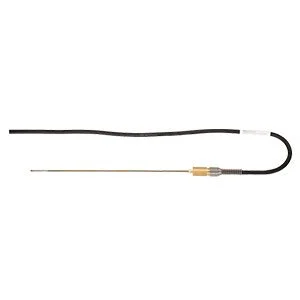
Pt100 temperature sensor working principle
It rests on platinum’s steady rise in electrical resistance as it warms. At 0 °C, the element sits at 100 Ω. You send a small current through the wire and measure the voltage drop. Then you apply Ohm’s law (V = I × R) to calculate resistance. Finally, you convert that resistance into a temperature reading with a standard formula.
Benefits of this approach
- High repeatability across –200 °C to +650 °C
- Simple calibration with ice baths or dry-block devices
- Minimal drift over years under harsh conditions
Grasp their working principle to tune sensors and control loops precisely.
Key Advantages of PT100 Sensors in Hazardous Locations
Accuracy and Stability
- Hold ±0.1 °C precision at 0 °C
- Show less than 0.2 °C drift over five years
- Stay accurate with three- or four-wire circuits
Durability and Corrosion Resistance
- Operate up to 650 °C without change
- Use Inconel, stainless, or ceramic sheaths
- Seal hermetically against salt and moisture
- Resist acids, solvents, and coastal air
These strengths help Ras Al Khaimah refineries run smoothly in humid, hot weather without surprise shutdowns.
Explosion-Proof Protection Methods
Intrinsic Safety (Ex i)
Engineers install zener barriers and isolators to cap voltage and current at safe levels. Portable analyzers and handheld scanners often use this method.
Flameproof Enclosures (Ex d)
- Cast-aluminium or cast-iron bodies rated Ex d IIB T6
- Certified seals at cable entries
- Internal parts strong enough to contain any spark
- Ground straps to spread heat away
Pressurized Enclosures (Ex p)
- Keep the inside over-pressured with clean air
- Block entry of explosive gas mixtures
- Use in dust or mixed-hazard zones
With these measures, technicians install them right inside high-pressure reactors and still meet safety codes.
Design Considerations for UAE Facilities
Projects in Dubai often run at 150 bar and 350 °C. Teams then:
- Pick probe lengths to match insertion depths
- Choose sheath diameters for flow and response time
- Select tip styles: rounded, pointed, or flat
They also
- Bond sensor bodies to a solid plant earth
- Route cables inside steel conduits
- Keep bends gentle to avoid wire fatigue
Proper design cuts mechanical stress and stops reading errors at startup.
Installation Best Practices in UAE Industrial Sites
Before any wiring, teams walk the site to note gas type, zone, and temperature swings. They then:
- Mount sensors in thermowells or flange pockets
- Weld pockets for pipelines and reactors
- Seal cable glands with Ex-rated compound
- Perform loop checks and insulation tests
Detailed checks ensure each PT100 Sensor loop works on Day 1 without leaks or shorts.
Calibration and Maintenance in Explosion-Proof Zones
Technicians follow ISO 17025 methods onsite or in labs. They use ice baths and dry-block calibrators for primary verification. Then they:
- Calibrate every 6–12 months
- Inspect sheaths for nicks or corrosion
- Tighten fittings and examine cables
- Swap any sensor that drifts over 0.2 Ω
This regimen keeps plants safe, cuts repairs, and extends sensor life.
Prices in the UAE Market
The PT100 Temperature Sensor price in UAE depends on accuracy, sheath metal, and Ex rating. Typical ranges:
- Class B probes: AED 120–200
- Class A and AA: AED 250–450
- Ex i or Ex d certified units: AED 800+
Buyers can track Pt100 sensors price shifts tied to platinum quotes and customs duties. Procurement teams also log the price trends over six months to find the best buying window.
Cost Optimization and Total Cost of Ownership
Plant managers weigh initial sensor costs against ongoing expenses. They list:
- Pt100 sensors price per model
- Calibration fees and labor rates
- Downtime losses from swap-outs
- Spare-parts storage costs
They time purchases when import duties dip to trim the PT100 Temperature Sensor price further and standardize on one sensor family to cut training time.
Future Trends and Smart Explosion-Proof Temperature Measurement
New IIoT-ready transmitters link them to cloud platforms. Teams then:
- Track readings in real time on mobile dashboards
- Set alerts for any out-of-range value
- Use predictive analytics to flag sensor wear
- Swap parts before failure hits
Wireless HART and Fieldbus cut wiring costs. Look for self-diagnosing probes and AI-driven maintenance suggestions next. Ready to boost your plant’s safety and efficiency? Explore our certified PT100 Sensors in Dubai now and secure your system against any thermal risk.
FAQs
How often should I calibrate PT100 Sensors?
Calibrate every 6–12 months. Harsh processes may need six-month intervals. Always follow ISO 17025 guidelines.
What Can I Do with them?
It facilitates you to:
- Send a known current through platinum.
- Measure the voltage drop.
- Calculate resistance with Ohm’s law (V = I × R).
- Map resistance to temperature with a standard curve.
- Feed that value into your control system.
- See live readings on the operator panel.
What temperature range can it cover?
- Standard: –200 °C to +650 °C
- Some go to 800 °C
- Accuracy drops near extremes
- Sheath material affects maximum rating
- Calibration stays stable across the range
What affects their price?
You see variations based on accuracy class, sheath metal, and Ex certification. Bulk orders often secure 10–15% discounts.
Can I use them in corrosive environments?
Yes, as long as you select stainless or Inconel sheaths and hermetic seals to keep chemicals and moisture out. To identify wear early, do routine inspections.
What is the difference between Pt100 and Pt1000?
Here are their major differences:
- Pt100 reads 100 Ω at 0 °C; Pt1000 reads 1000 Ω.
- Pt100 costs less and suits more loops.
- Both use the same working principle.
- Pt1000 offers finer resolution on small shifts.
- Both fit three- or four-wire circuits.